There’s a moment every hunter, birder, or nature lover knows well: standing on the edge of a clearing at dawn, mist hanging low, waiting for the world to reveal its secrets. A good spotting scope doesn’t just bring that scene closer; it transforms how you experience it. The difference between a mediocre scope and a great one isn’t just price; it’s clarity, confidence, and reliability when conditions are at their toughest.
So, what separates a quality spotting scope from something that’ll leave you frustrated? Let’s dig in.
A great scope starts with great glass. If the view through your lens isn’t bright and sharp in perfect store lighting, it won’t stand a chance in low light out in the bush. Larger objective lenses, like the 80mm glass on the Vanguard Endeavor XF-80A, allow more light in, giving you crisp, detailed images even in the earliest and latest hours of the day. High-quality coatings and well-made prisms aren’t just marketing terms; they’re the reason you can tell a tree branch from an antler at 300 meters.
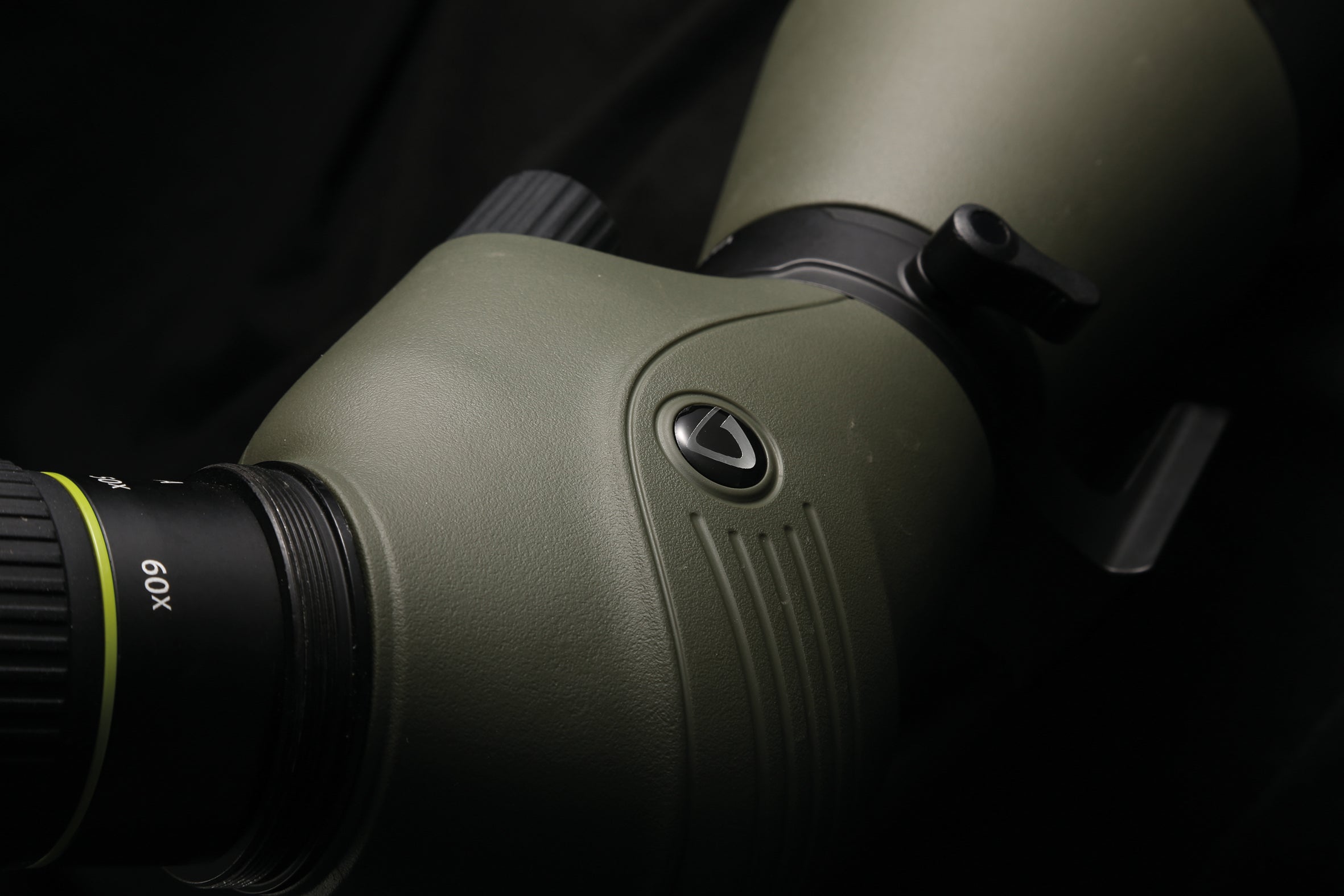
Of course, optical performance isn’t everything. A spotting scope is an outdoor tool, and it needs to survive the outdoors. Good scopes are sealed tight, nitrogen- or argon-filled to keep out fog, and wrapped in rugged armor that lets you toss them into your pack without worry. The XF-80A, for instance, is waterproof and built to handle rough terrain, which means it’ll still be going strong long after cheaper scopes have been sidelined by a little rain or dust.
Comfort also plays a bigger role than many people realize. If you’re spending hours glassing a hillside, eye relief and ergonomics become essential. A good spotting scope feels intuitive to use; you don’t have to crane your neck or fight with stiff zoom rings. Scopes designed with hunters and outdoor enthusiasts in mind often feature rotating tripod mounts and built-in sunshades, which make adjusting to different shooting positions or changing light conditions seamless.
And while magnification sounds like the most important spec on paper, it’s often misunderstood. More zoom isn’t always better; a poorly made high-zoom scope will only give you a shakier, dimmer image. A balanced zoom range, like the XF-80A’s 20–60x, paired with excellent optics, lets you scan landscapes wide and then dial in for detail, all without losing clarity.
Finally, there’s peace of mind. Quality spotting scopes almost always come with a strong warranty, and that’s not just a perk; it’s a sign that the manufacturer trusts their own craftsmanship. When a company is willing to stand behind its optics for life, you know you’re holding something built to last.
A spotting scope is an investment, and like all good investments, it should pay dividends for years to come. When you’re glassing in golden hour light or spotting movement on a distant ridge, you’ll be glad you chose one with the right mix of clarity, durability, and usability. Whether you go for something like the Vanguard Endeavor XF-80A or another trusted model, take the time to evaluate your gear the way you’d evaluate a shot carefully, patiently, and with an eye for precision. The difference isn’t just what you see through the glass. It’s how much more of the outdoors you get to truly experience.